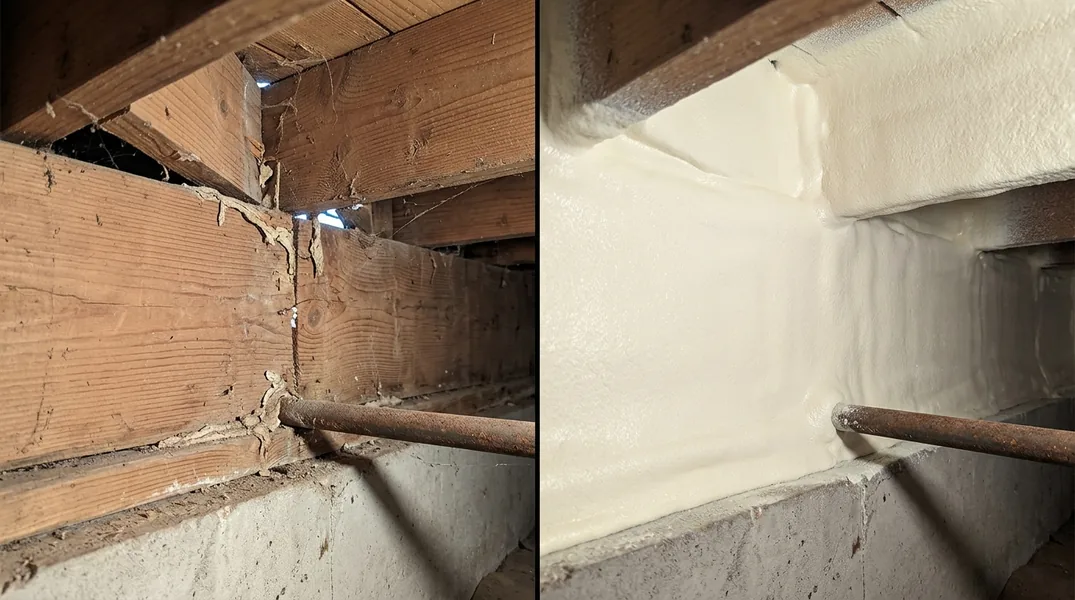
The Agricultural Challenge: Why One Insulation Solution Doesn't Fit All
The Texas Panhandle is home to thousands of farm operations, from grain storage facilities to equipment shops and livestock shelters. Each of these structures faces unique environmental pressures that standard residential insulation simply cannot handle. Farm shops experience dramatic temperature swings, moisture infiltration from equipment washing, and chemical exposure from fuels and lubricants. Metal buildings, whether used for storage or as working spaces, conduct heat and cold aggressively, creating condensation problems that can destroy inventory and equipment.
When you're operating a business in Amarillo, choosing the wrong insulation type can cost you thousands in energy waste, structural damage, and premature repairs. This is why agricultural property owners need to understand the differences between foam insulation options and how they perform under real-world farm conditions. The choice between Closed Cell Spray Foam Insulation and Open Cell Spray Foam Insulation isn't just technical jargon; it's the difference between an efficient operation and constant headaches.
Understanding Closed Cell Foam for Metal Building Superiority
Closed cell spray foam insulation has become the gold standard for metal buildings across the Panhandle because of its exceptional moisture resistance and structural strength. This foam type features cells that are completely sealed, creating a vapor barrier that prevents water infiltration from condensation and weather exposure. For metal buildings that are prone to sweating in temperature fluctuations, this moisture resistance is absolutely critical. When warm, humid air meets a cold metal roof or wall, condensation forms rapidly. Without proper protection, this moisture leads to rust, mold growth, and corrosion of the metal structure itself.
The R-value performance of closed cell foam is also superior, typically ranging from R-6 to R-7 per inch. This means you need less material to achieve the same thermal resistance compared to open cell alternatives. For large metal buildings used in agricultural operations, this efficiency translates directly to lower material costs and faster installation times. Additionally, closed cell foam adds structural rigidity to metal buildings, which can be important for buildings that experience wind loads common in the Texas Panhandle. The dense, rigid composition actually strengthens the building envelope, providing benefits beyond just insulation.
Why Farm Shops Benefit from Open Cell Spray Foam
While metal buildings typically demand closed cell protection, farm shops present a different scenario. Many farm shops are traditional wood-frame or partially enclosed structures where moisture management and vapor permeability matter differently. Open Cell Spray Foam Insulation offers advantages in these environments because it allows buildings to breathe while still providing excellent thermal protection. Open cell foam has an R-value of approximately R-3.5 to R-3.8 per inch, which is lower than closed cell, but it excels at managing air movement and moisture vapor transmission.
Farm shops often contain equipment that generates heat and humidity during operation. Welding, equipment washing, and fuel storage all create moisture and chemical vapor that needs to escape the building envelope. Open cell foam's semi-permeable nature allows these vapors to pass through gradually, preventing pressure buildup and the associated moisture problems. The cost advantage is also significant; open cell foam typically costs less per square foot than closed cell alternatives, making it a practical choice for budget-conscious farm operations. For shops in Amarillo that aren't dealing with the extreme condensation issues of uninsulated metal buildings, open cell foam provides excellent value and performance.
Insulation Removal Cost in Amarillo: Planning Your Upgrade
Before installing new spray foam insulation, many farm buildings and metal structures have existing insulation that must be removed. Understanding insulation removal cost is essential for budgeting your upgrade project. The cost of old insulation removal depends on several factors, including the type of existing material, the square footage of the space, accessibility, and whether hazardous materials are present.
One particularly important concern for older agricultural buildings in the Panhandle is vermiculite insulation removal. Vermiculite, a mineral-based insulation used extensively before the 1980s, can contain asbestos and poses serious health risks if disturbed improperly. If your farm building was constructed before 1990, there's a reasonable chance it contains vermiculite insulation. Professional attic insulation removal services can safely identify and remove hazardous materials according to EPA guidelines, protecting your family and workers from exposure. The insulation removal pricing for hazardous materials is higher than standard removal, but it's a necessary investment in safety. Amarillo Spray Foam Insulation can assess your building's insulation type and provide a detailed removal estimate before recommending your spray foam solution.
Metal Building Condensation: A Problem Only Proper Foam Solves
Metal buildings are notorious for condensation problems, particularly in agricultural settings where humidity levels fluctuate dramatically. A metal roof or wall acts like a heat sink, rapidly transferring temperature changes to the interior space. When warm, humid air contacts this cold surface, moisture condenses just like water on a cold glass. In uninsulated or poorly insulated metal buildings, this condensation drips onto equipment, inventory, and livestock, creating rust, mold, and disease problems.
Spray foam insulation, particularly closed cell varieties, solves this problem by creating a thermal break between the metal exterior and the interior environment. The foam's insulating properties keep the interior surface temperature closer to the air temperature in the building, dramatically reducing condensation formation. Additionally, the foam's vapor barrier properties prevent moisture from penetrating the insulation layer itself. For metal agricultural buildings in the Panhandle, this difference is transformative. Farmers report eliminating hay rot, reducing equipment corrosion, and improving livestock comfort after spray foam installation. The investment in proper insulation pays for itself through reduced losses and extended equipment life.
Choosing the Right Foam: When to Call a Professional Near Me
The decision between closed cell and open cell spray foam isn't one you should make alone. Your building's specific use, existing structure type, local climate patterns, and budget all play important roles. A professional evaluation from Amarillo Spray Foam Insulation ensures you get a recommendation tailored to your actual situation, not a generic one-size-fits-all approach. Our team understands the unique demands of Panhandle agriculture and the performance requirements of both traditional farm shops and modern metal buildings.
If you're operating a farm business in Amarillo or the surrounding area and wondering whether your building needs new insulation or a complete upgrade, contact us today for a free estimate. We'll evaluate your current insulation condition, discuss your performance goals, and recommend the foam type that delivers the best return on investment for your operation. Call Amarillo Spray Foam Insulation at (806) 639-5022 to schedule your consultation, or visit our website at https://amarillo-spray-foam.com to learn more about how spray foam can transform your agricultural building's efficiency and durability.
Looking for a professional spray foam insulation contractor in Amarillo? Amarillo Spray Foam Insulation responds fast for all your spray foam insulation needs.
Get a Free Quote