Why New Construction in Canyon Needs Superior Insulation Planning
Building a new home in Canyon or Southwest Randall County is an exciting opportunity to make smart choices from the ground up. One of the most important decisions you'll make during construction is selecting the right insulation for your attic and walls. Unlike renovation projects where you're working around existing structures, new construction allows you to install the most effective insulation system without compromise. The choices you make now will affect your energy bills, comfort levels, and home durability for decades to come.
The Texas Panhandle climate presents unique challenges. Hot summers, cold winters, and significant temperature swings mean your insulation must perform year-round. Many builders and homeowners default to traditional options like fiberglass batts or blown-in cellulose simply because they're familiar and initially cheaper. However, these conventional materials often underperform in our climate and require more frequent maintenance. When you're building new, you have the chance to invest in a superior solution that will pay dividends through lower utility costs and better home performance.
Spray Foam vs Blown-In Insulation: Why the Comparison Matters for New Builds
The debate between spray foam and blown-in insulation is one every new construction homeowner should understand. Blown-in insulation, whether cellulose or fiberglass, is loose-fill material that's blown into wall cavities and attic spaces using pneumatic equipment. It fills spaces reasonably well, but it has significant limitations. Blown-in materials settle over time, creating gaps and reducing their R-value effectiveness. They also cannot seal air leaks, which means conditioned air escapes through cracks and gaps in your home's envelope. In Amarillo, where temperature extremes are common, those air leaks translate directly into higher heating and cooling costs.
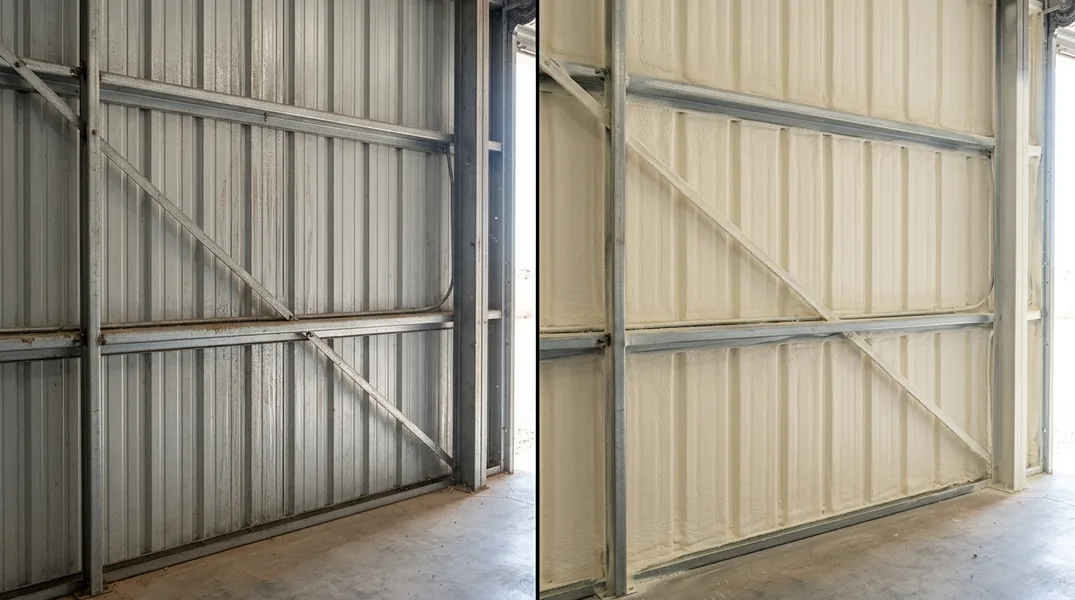
Attic Spray Foam Insulation works differently. When applied, spray foam expands to fill every cavity, crack, and void in your attic or wall space. It creates an air-tight seal that prevents the infiltration and exfiltration of conditioned air. This means your HVAC system doesn't have to work as hard to maintain your desired temperature. For new construction, spray foam offers builders and homeowners the ability to create a truly sealed thermal envelope that blown-in insulation simply cannot match. The upfront cost is higher, but the energy savings and performance benefits justify the investment over the life of your home.
Spray Foam vs Fiberglass: Understanding the Performance Difference
Fiberglass batts have been the standard attic insulation for generations, and they remain popular because they're inexpensive and easy to install. However, fiberglass has inherent weaknesses that become more apparent in new construction where you have the opportunity to do better. Fiberglass batts are only effective when they're installed perfectly with no gaps, compression, or moisture issues. In practice, this rarely happens. Batts are also air-permeable, meaning they don't stop air movement through your attic. Moisture can condense on fiberglass during temperature swings, potentially leading to mold growth and reduced performance over time. Additionally, fiberglass loses effectiveness as it ages and settles.
Closed Cell Spray Foam Insulation and Open Cell Spray Foam Insulation both outperform fiberglass in critical ways. Closed-cell foam provides higher R-value per inch, superior air sealing, and moisture resistance. Open-cell foam offers excellent sound dampening and air sealing at a lower density. Both types expand to fill every nook and cranny, eliminating the installation gaps that plague fiberglass. For new construction in Canyon and Southwest Randall County, choosing spray foam over fiberglass means choosing a system that will maintain its performance for decades without settling, compressing, or losing effectiveness.
Best Insulation for Attic: Why Spray Foam Wins in the Texas Panhandle
When builders and homeowners ask what the best insulation for attic spaces is, the answer depends on your priorities and budget. If your only concern is initial cost, blown-in or fiberglass might seem attractive. But if you're looking for the best overall performance, durability, and long-term value, spray foam is the clear winner. The best insulation for your attic is one that achieves and maintains a high R-value, prevents air leakage, resists moisture, and lasts the life of your home without degradation. Spray foam checks every box.
In new construction, your attic is the easiest place to apply spray foam because the space is unfinished and accessible. Contractors can apply the material to the underside of your roof deck, creating an insulated and conditioned attic space, or they can insulate the attic floor, depending on your home's design and needs. Either way, spray foam creates a thermal barrier that blown-in and fiberglass cannot match. The air sealing properties are especially valuable in attics, where air leaks often account for significant energy loss. When you're building new, installing spray foam insulation in your attic is an investment that reduces your energy consumption immediately and continues delivering savings throughout your home's life.
Spray Foam vs Cellulose: Why Cellulose Falls Short for New Construction
Cellulose is a blown-in insulation made from recycled paper and treated with fire retardants. It appeals to environmentally conscious homeowners because of its recycled content, but it has serious drawbacks that make it a poor choice for new construction in our climate. Cellulose is hygroscopic, meaning it absorbs and releases moisture from the air. In the Texas Panhandle, where humidity can fluctuate significantly, cellulose will absorb moisture during humid periods and potentially support mold growth. It also settles more dramatically than fiberglass, losing R-value over time. Cellulose requires careful installation to avoid voids, and it's difficult to inspect after installation to ensure quality.
Spray foam, by contrast, is moisture-resistant and doesn't support mold growth. It doesn't settle or degrade over time, maintaining its R-value and air-sealing properties indefinitely. While cellulose might cost less initially, it will likely require replacement or supplementation within 15 to 20 years. Spray foam, properly installed, will serve your home for the full life of the structure. For new construction where you're making long-term investments in your home's quality, spray foam is the superior choice over cellulose. If you're building in Canyon or the surrounding areas, the durability and performance of spray foam make it the best decision for your attic insulation.
Getting Your New Construction Project Started with Professional Spray Foam Installation
If you're planning new construction in Canyon, Southwest Randall County, or anywhere in the Amarillo area, now is the time to discuss spray foam insulation with your builder and insulation contractor. The installation process is straightforward when coordinated during the framing and rough-in stages of construction. Your contractor will apply the foam to the appropriate surfaces, whether that's your attic, walls, or both, creating a sealed thermal envelope that sets your home apart from standard construction.
Amarillo Spray Foam Insulation has extensive experience with new construction projects throughout the region. We understand the unique demands of the Texas Panhandle climate and the specific needs of new builds. Whether you're interested in Closed Cell Spray Foam Insulation for maximum R-value and moisture protection or Open Cell Spray Foam Insulation for sound control and cost efficiency, we can help you make the right choice for your project. Contact us today at (806) 639-5022 or request a free estimate to discuss your new construction insulation needs. Building right the first time means choosing spray foam insulation.
Looking for a professional spray foam insulation contractor in Amarillo? Amarillo Spray Foam Insulation responds fast for all your spray foam insulation needs.
Get a Free Quote