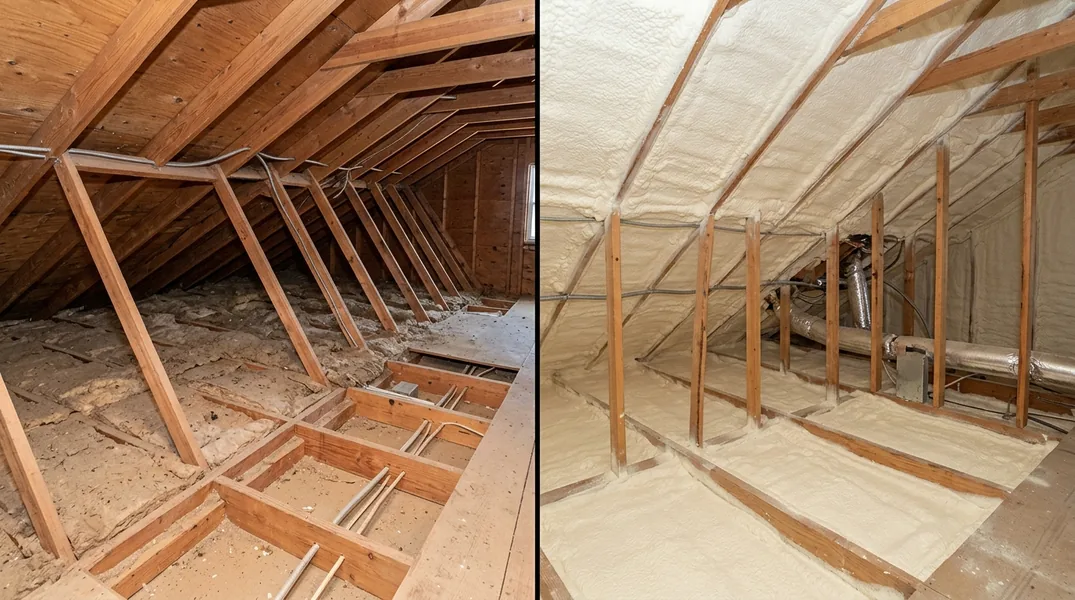
Why Mid-Century Brick Ranches Need Modern Insulation Solutions
The charming mid-century brick ranches that line the streets of Bivins Addition and Rolling Hills in Amarillo represent a unique architectural heritage. Built primarily between the 1950s and 1970s, these homes showcase classic design and solid construction. However, their original insulation methods often fall short by today's energy efficiency standards. Many of these properties rely on fiberglass batts, mineral wool, or even no insulation at all in critical areas like attics and wall cavities.
The Texas climate, with its intense summer heat and occasional winter cold snaps, puts significant pressure on aging insulation systems. Homeowners in these beloved neighborhoods frequently discover that their energy bills are climbing despite moderate use, or that certain rooms remain uncomfortable no matter how hard the HVAC system works. This is where Attic Spray Foam Insulation becomes a game-changer. Modern spray foam technology addresses the limitations of mid-century construction while preserving the character and structure of these historic homes.
Is Spray Foam Insulation Worth It for Your Amarillo Home?
When homeowners ask whether spray foam insulation is worth the investment, the answer depends on several factors specific to your property and priorities. For mid-century brick ranches in Amarillo, the value proposition is particularly strong. Spray foam expands to fill every crack, crevice, and gap in your attic or walls, creating an air-tight seal that traditional insulation simply cannot achieve. This translates directly into lower cooling costs during our scorching summers and reduced heating expenses when temperatures drop.
Beyond energy savings, spray foam insulation provides structural benefits that older homes desperately need. The expanding foam acts as a binder, reinforcing roof decking and wall cavities. It also creates a moisture barrier that protects against humidity infiltration, a critical advantage in Amarillo's variable climate. Most homeowners see a return on their investment within five to seven years through reduced utility bills, and the benefits continue to accumulate over decades. When you factor in improved comfort, fewer drafts, and reduced strain on aging HVAC systems, the case for spray foam becomes even more compelling.
Is Spray Foam Insulation Safe? Addressing Common Concerns
Safety is a legitimate question that every homeowner should ask before choosing any insulation product. The good news is that modern spray foam insulation, when properly installed by certified professionals, is safe for residential use. The two main types used in attics are Closed Cell Spray Foam Insulation and Open Cell Spray Foam Insulation, and both have undergone rigorous testing and meet strict building codes and EPA standards.
During installation, trained technicians use proper equipment and follow established safety protocols to ensure that the application is completed correctly. The chemicals used in spray foam formulations are carefully regulated, and professional installers are trained to handle them safely. Once fully cured, spray foam poses no health risk to occupants. The material becomes inert and does not off-gas harmful substances into your living spaces. However, it is crucial to work with a reputable, licensed contractor who follows best practices and provides proper ventilation during the installation process.
Understanding Spray Foam Off-Gassing and Long-Term Safety
One concern that surfaces frequently in homeowner forums is spray foam off-gassing. This term refers to the release of volatile organic compounds (VOCs) during and immediately after installation. It is important to understand that off-gassing is primarily a concern during the application phase and the first 24 to 48 hours after installation. Professional installers take this seriously by ensuring adequate ventilation during the spray process and advising homeowners to vacate the attic area until the foam has fully cured.
Once spray foam has completely hardened, it becomes chemically stable and does not continue to release harmful gases. The foam is then essentially a solid, inert material that remains in place for decades. Modern spray foam products are formulated to minimize VOC emissions compared to older formulations, and reputable manufacturers provide detailed safety data sheets and installation guidelines. If you are considering spray foam for your home, discussing off-gassing concerns with your installer is perfectly reasonable. A professional contractor will explain their specific products, curing times, and ventilation protocols to put your mind at ease.
Spray Foam Insulation Problems and Pros and Cons to Weigh
No insulation product is perfect, and spray foam is no exception. Understanding both the advantages and potential drawbacks helps you make an informed decision. On the positive side, spray foam offers superior air sealing, excellent R-value per inch, moisture resistance, and structural reinforcement. It excels at reaching difficult areas and creating a continuous thermal barrier that reduces energy loss significantly. For mid-century homes with irregular framing or existing air leaks, these benefits are substantial.
However, there are legitimate spray foam insulation problems to consider. The material can be more expensive upfront than traditional fiberglass or cellulose insulation. If installed incorrectly, it may trap moisture in wall cavities, potentially leading to mold growth or wood rot. In some cases, closed-cell foam can be too rigid and may cause issues if the building structure shifts. Additionally, if you ever need to access wiring or plumbing in an attic after spray foam installation, it becomes more challenging. The key to avoiding these problems is choosing a qualified, experienced contractor who understands your specific home and follows industry best practices. Amarillo Spray Foam Insulation has the expertise to navigate these considerations and recommend the right solution for your property.
Attic Spray Foam Insulation Cost in Amarillo: What to Budget
Understanding the financial investment required for spray foam insulation helps you plan and compare options. The pricing for attic spray foam varies based on several factors, including the size of your attic, the type of foam selected, existing conditions, and accessibility. Closed-cell foam typically costs more per square foot than open-cell foam but provides a higher R-value and superior moisture protection. For a typical attic in a mid-century ranch home in Amarillo, homeowners can expect to invest between $1,500 and $4,500 for professional installation.
While this may seem like a significant expense, remember that energy savings and home comfort improvements often justify the cost quickly. Many utility companies and government programs offer rebates or incentives for energy-efficient home improvements, which can offset part of your investment. To get an accurate picture of what your specific project will cost, contact Amarillo Spray Foam Insulation at (806) 639-5022 or request a free estimate. Our team will assess your attic, discuss your goals, and provide transparent pricing so there are no surprises.
Choosing the Right Spray Foam Solution for Your Bivins Addition or Rolling Hills Home
Selecting between Closed Cell Spray Foam Insulation and open-cell options depends on your specific needs and budget. Closed-cell foam is denser, provides a higher R-value (approximately R-6 to R-7 per inch), and offers superior moisture protection. It is ideal for attics in climates with significant temperature and humidity fluctuations, like Amarillo. Open-cell foam is lighter, less expensive, and provides good air sealing with an R-value of around R-3.5 per inch. It is more flexible and allows some moisture vapor transmission, which some applications prefer.
Beyond attic insulation, homeowners in older neighborhoods may also benefit from Wall & Injection Foam Insulation to improve the energy efficiency of exterior walls without requiring major renovation. This technique is particularly valuable for preserving the historic character of brick ranches while upgrading their thermal performance. The team at Amarillo Spray Foam Insulation can evaluate your home's unique characteristics and recommend the best approach. Whether you are dealing with an uninsulated attic, drafty walls, or specific problem areas, we have the expertise to deliver results that enhance comfort and reduce energy costs for years to come.
Looking for a professional spray foam insulation contractor in Amarillo? Amarillo Spray Foam Insulation responds fast for all your spray foam insulation needs.
Get a Free Quote